
Compare Kemper County Property Values
Not every value figure measures the same thing. The Tax Assessor estimates true value for the assessment roll. Mississippi's class ratio then produces an assessed value for tax use. A sale price is different. It comes from a transfer. It may appear in the deed or a related recording rather than in the public parcel layer. A private appraisal answers yet another question. It gives an opinion of value as of a stated date. Compare like with like before calling two figures a conflict.
| Value Type | Meaning | Record Source |
|---|---|---|
| Assessed value | Tax base after the state class ratio is applied | Tax Assessor roll |
| True or market value | Assessor's estimate of fair cash value | Assessment record |
| Last sale price | Consideration tied to a transfer, which may not be an open-market sale | Recorded deed or Chancery record |
| Land and improvements | Components assigned to the tract and taxable improvements | ArcGIS parcel attributes |
The public number is only a starting point. It cannot reflect every condition a buyer or appraiser would examine. An old sale does not set today's market either. Use the roll for its tax purpose, the deed for transfer evidence, and an appraisal for a current opinion of value.
Read Kemper County Value Fields
The Kemper parcel layer lists its fields plainly. Land, improvement, cultural, uncultivated, and total-value fields sit beside acreage, tax district, exemption code, homestead flag, deed book, deed page, and deed date. The grouping shows how the roll divides a parcel. No sale-consideration field appears in the layer. And no official source treats the web record as a certified appraisal.
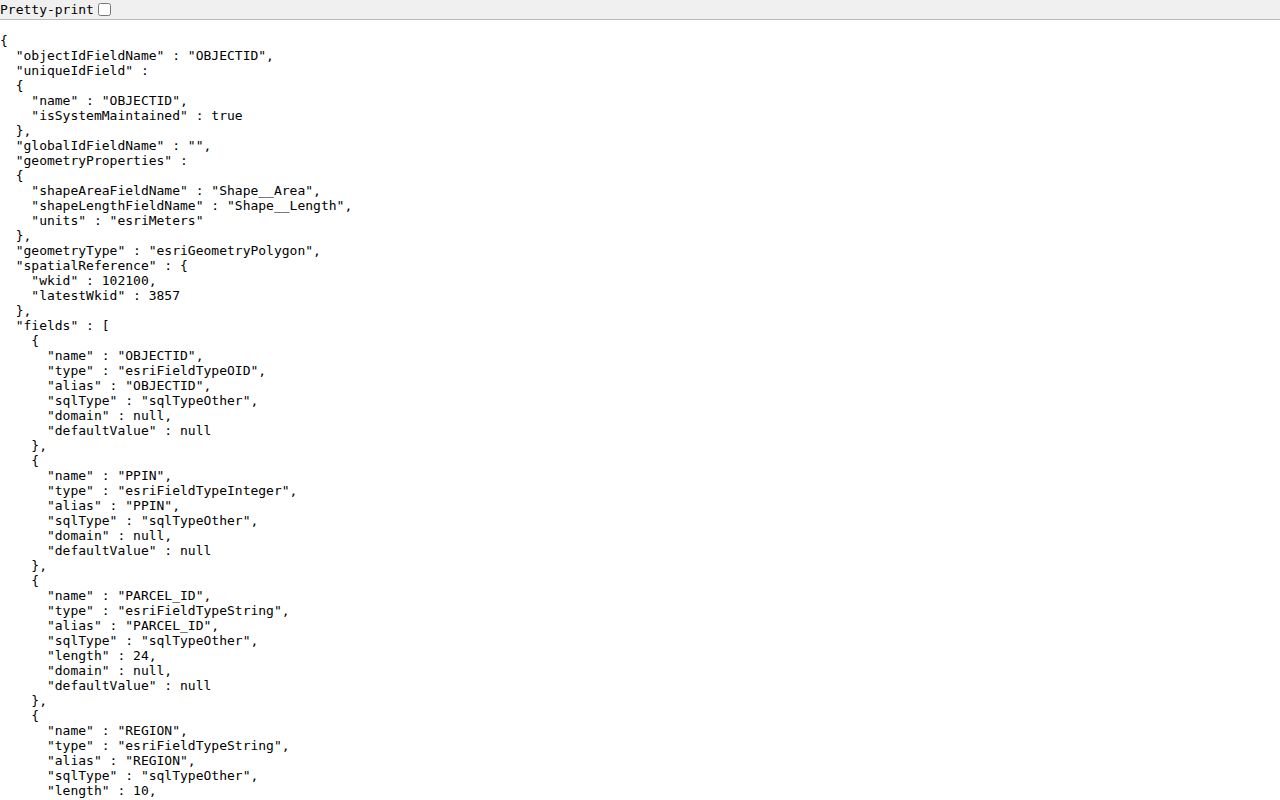
The sample parcel groups everything together. Value, acreage, legal description, address, and deed reference sit in one view, keeping assessment evidence apart from title and sale evidence.
Kemper County Assessed Value Ratios
Classification controls the math. Under Department of Revenue appraisal guidance, Class I owner-occupied single-family residential real property is assessed at 10 percent of true value. Class II, other real property, sits at 15 percent. Other classes cover personal property, utilities, and motor vehicles. Those should not be mixed into a house or land comparison. Do the arithmetic once. A $100,000 Class I true value yields a $10,000 assessed value before millage. That gap is the formula at work, not a 90 percent loss of worth. Confirm each class with the Kemper County Tax Assessor.
- True value
- The assessor's estimate of fair cash value before the class ratio.
- Assessed value
- The value after the statutory class ratio, used as the tax base.
- Assessment ratio
- The percentage assigned to a class of property under Mississippi law.
- Sale consideration
- The amount or value tied to a transfer, subject to the deed's terms.
- Revaluation
- The periodic review used to bring real-property values back to current levels.
Kemper County's 2026 Value Roll
The Kemper County assessment and tax hub carries an Effective Year 2026 label. That label marks the assessment context of the roll. It does not promise that every ownership or deed field changed on the same day. Board of Supervisors minutes from July 7, 2025 record approval of the Real Roll and Personal Roll. That milestone is useful locally. The minutes set no parcel-by-parcel refresh schedule. State law requires real property to be revalued at least once every four years, with regular physical inspection. New work and parcel changes can matter in between. Save the effective year. Pair it with the access date whenever you compare a Kemper County property value.
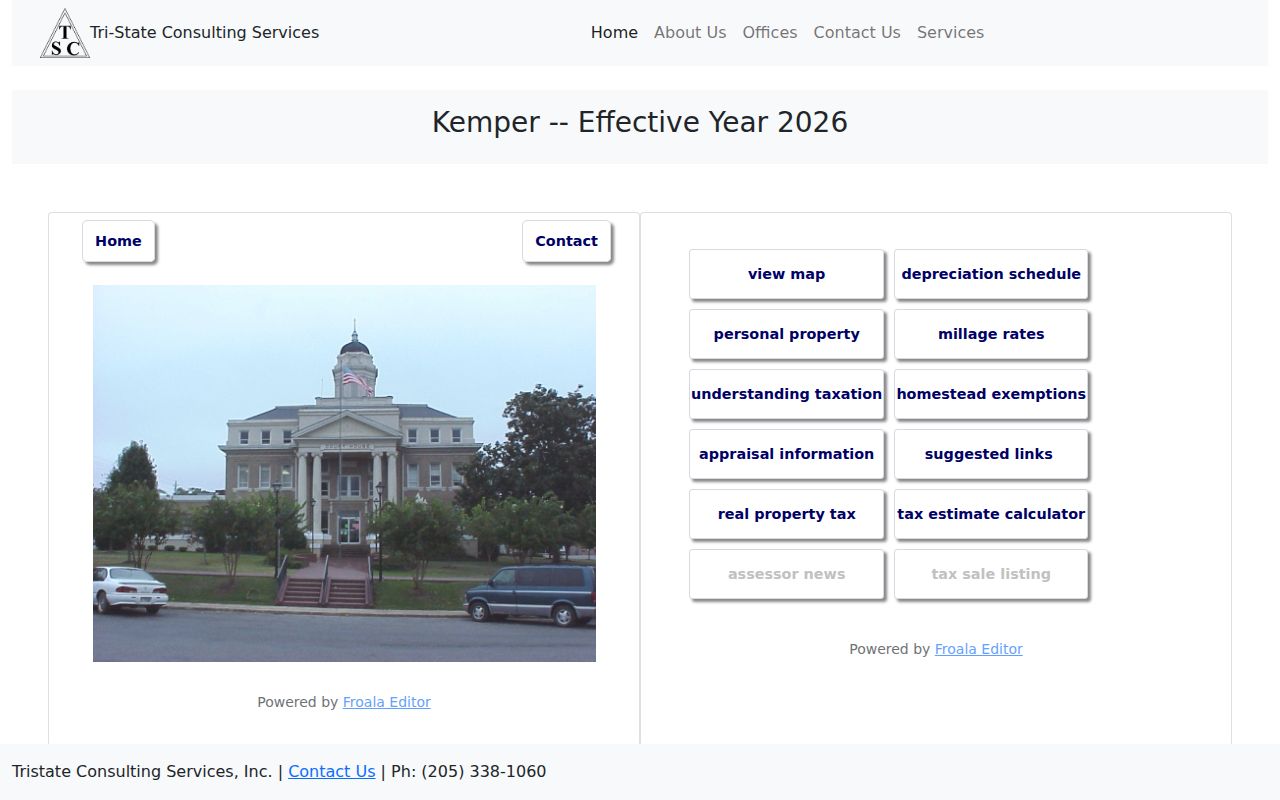
The hub date is roll context only. It does not turn an assessment into a live sale estimate, and no roll label should be read as one.
Kemper County Land Value Components
Read the land and improvement fields together. Land value relates to the tract itself. Improvement value covers structures and other taxable improvements represented on the roll. Cultural and uncultivated fields matter on rural parcels. Acreage adds useful scale across Kemper County. No single field reveals physical condition, repair needs, easements, access, or survey-level area. One Kemper County record, PPIN 891, shows the combined view: land and total values, acreage, tax district, a deed date, a short legal description, and no sale consideration. Take the whole row. Then decide which value question the data can truly answer.
Locate Kemper County Assessed Values
The Tax Assessor maintains the annual roll. The Tri-State search makes its basic parcel results public, and ArcGIS offers a second route to value components. Chancery holds the deed for transfer and consideration questions. The Tax Collector handles the bill and payment status, which sit apart from the meaning of value.
- Open Tri-State and choose one key: Address, Owner, PPIN, or PARID.
- Save PPIN, PARID, situs, deed book/page, legal text, and the displayed amount.
- Cross-check ArcGIS land, improvement, total value, acreage, and tax flags.
- Write down the effective year and access date.
- Request the referenced deed from Chancery if a sale figure is needed.
Search one field at a time. The form clears other inputs when a new mode gains focus, so preserve PARID punctuation and use PPIN as the safer crosswalk. A value without its year is easy to misread.
Kemper County Sale Price Evidence
Deed records in Kemper County are indexed by book, page, and date. The parcel schema carries no sale-price field. Treat the deed reference as a lead. Then request the recorded instrument from the Kemper County Chancery Clerk by counter or mail. The county publishes no online grantor-grantee portal. No cutoff year applies to its deed records.
Any deed figure still needs context. Estate deeds, quitclaims, transfers between relatives, and life estates can all carry amounts far from an arm's-length price. Quitclaims and family transfers rarely reflect market value. Before comparing a deed amount to a current assessment, weigh the instrument type. Also weigh the parties, the legal description, and the date. Resist the temptation to back into a sale figure from tax due. That number measures something else entirely.
Kemper County Value and Homestead
A Kemper County property search can return a parcel layer with a homestead flag. It may also show an exemption code. These fields help explain why two similar parcels show different taxable outcomes. They do not change what assessed value means.
Homestead relief flows through the county under state rules. Applications run January 2 through April 1. Tier 1 and Tier 2 state rules govern eligibility.
Assessed value, exemptions, millage, and tax due are related but not interchangeable. For bill details, exemption questions, delinquency, and appeal procedure, the Kemper County property tax records page is the right stop. Note the flag for an honest comparison. Then stop short of turning it into a tax calculation.
Kemper County Value Record Limits
An assessment cannot reveal interior condition, repair costs, buyer demand, financing terms, or every right attached to the land. A GIS line is not a survey. The owner of record on the assessment is not certified title. A deed reference is not the same as reviewing the deed itself. Each record was built to answer one question, and these limits mark that line.
When figures disagree, match each number to its source and date. Ask the Tax Assessor about the roll and class. Ask Chancery about the transfer. For a current appraisal, bring in a qualified appraiser. Kemper County publishes no town-level value trend for DeKalb or Scooba, so a handful of parcel samples should never be dressed up as a market trend.
Assessment is not an appraisal. Kemper County assessed value serves taxation. It does not state what a buyer would pay today.